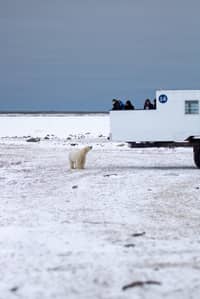
 Bears and belugas
Guides
Language
EnglishCurrency
US dollar · $Prices on GetYourGuide appear in your chosen currency.
Guide · Best time
Best time to see polar bears in Churchill
When the bears are on the ice, when they come ashore and when they gather by the bay: the best time to see polar bears in Churchill, explained month by month.
Check availabilityfrom $229
Editorial team, churchill-polar-bear-tours.comUpdated October 16, 20267-minute read19 sources
Quick answer
- 01Peak
- October to early November is the best time for polar bears in Churchill.1
- 02Why then
- The bay begins to freeze and the bears gather along the coast.2
- 04Winter and spring
- From mid-November to mid-July most bears are out on the ice of Hudson Bay.5
- 05Tours
- Frontiers North runs day tours in July to August and October to November.6
The short answer: October to early November
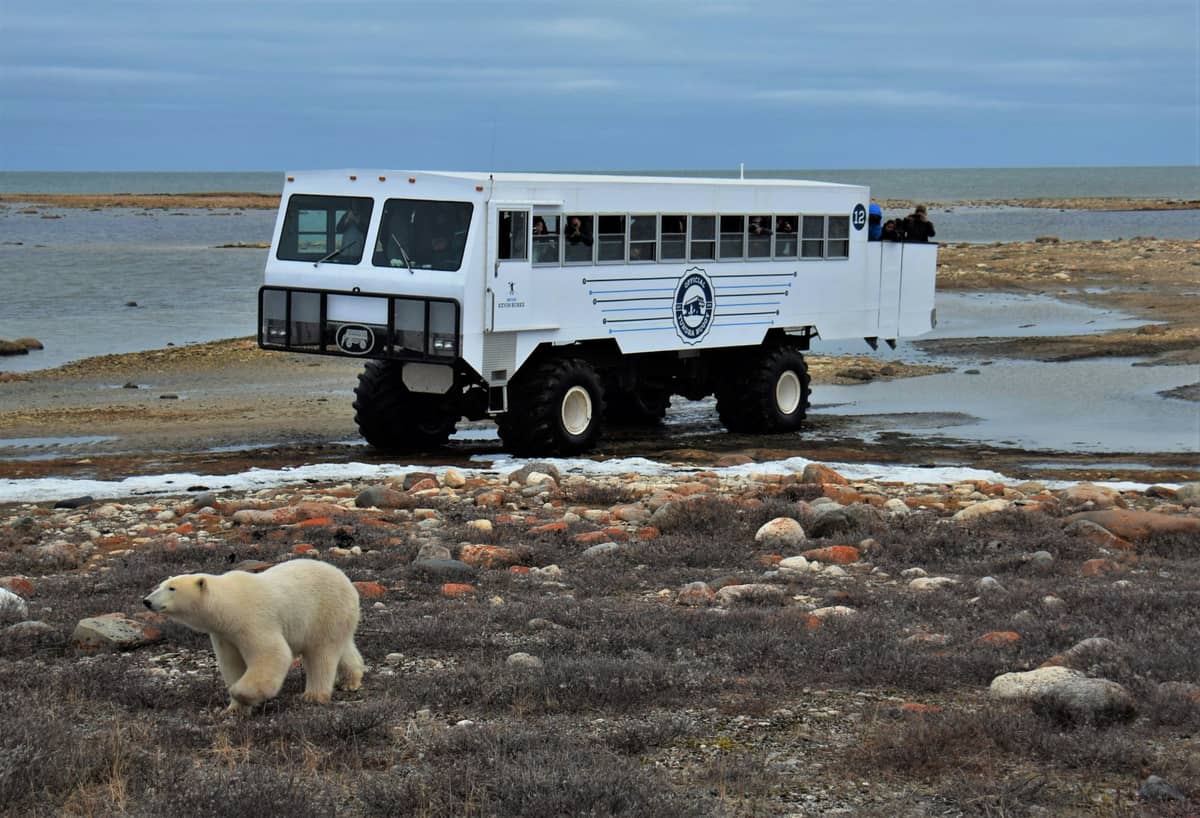
The best time to see polar bears in Churchill is October to early November, according to Travel Manitoba.1 In those weeks Hudson Bay begins its steady freeze, and the bears gather along the coast, eager to head out onto the ice and hunt seals.2 The numbers peak along the Cape Churchill peninsula, the stretch of coast that runs from the town to the northern tip of Wapusk National Park.7
That timing is not a tourist convention but the rhythm of the bears' year. Most of the Western Hudson Bay population spends the months from mid-November to mid-July out on the ice of the bay.5 From mid-July to mid-November the whole population is forced onto the coastal land as the ice disappears.3 The autumn weeks are the end of that time ashore, when the bears are waiting at the water's edge for the ice to return.
For a first trip, aim for the middle of that window and give yourself a few days in town. The day trip on this site runs in the autumn season, and the operator describes it as an 8-hour day on the tundra with a light meal on board. Booking a tundra day in late October or the first days of November gives you the best odds without relying on a single date, and leaves room for weather.
The bear year
Where Churchill's polar bears spend the year
-
Mid-November to mid-July
On the ice
Most of the population hunts on the frozen bay.5
-
From mid-July
Ashore
The bears come back to land around Churchill.3
-
July and August
Summer bears
Low-key bears, often resting on rocks.4
-
October to early November
Peak season
The bears gather by the freezing bay.1
-
Late November
Freeze-up
The bears walk out onto the new ice.8
Month by month: where the bears are
From December to early July the bears are mostly out on the frozen bay. The majority of the population spends mid-November to mid-July on the ice of Hudson Bay, where they hunt seals.5 In those months you will not find bears waiting along the shore near town, and Frontiers North's polar bear day tours are not running.6 Winter in Churchill is the season of the northern lights instead, and the town feels very different under deep snow.
As the ice breaks up in early summer, the bears come back to land. Polar Bears International reports that tracked Western Hudson Bay bears come ashore to their typical summer grounds around the town of Churchill.9 From mid-July to mid-November the whole population is on the coast, waiting for the bay to freeze again.3 Ashore they largely fast, living on the reserves they built up while hunting.10
The pattern ends with the freeze-up. The bears remain on land until the bay freezes over in late November, according to the Province of Manitoba.8 The exact date varies from year to year: in 2025, sea ice strong enough for bears to walk on did not form near Churchill until November 26.11 Once the ice holds, the bears walk out onto it, and the viewing season for the year is over. Build your trip around that rhythm and the rest falls into place.
Climate and bears
Churchill month by month
| Month | Sun (h) | No sun (h) | High / low | Wet days | Polar bears |
|---|---|---|---|---|---|
| Jan | 6.7 | 17.3 | -22 / -30 °C | 1 | on the ice |
| Feb | 8.9 | 15.1 | -20 / -29 °C | 1 | on the ice |
| Mar | 11.4 | 12.6 | -14 / -24 °C | 1 | on the ice |
| Apr | 14.1 | 9.9 | -5 / -14 °C | 1 | on the ice |
| May | 16.5 | 7.5 | 3 / -5 °C | 2 | on the ice |
| Jun | 18 | 6 | 12 / 2 °C | 3 | on the ice |
| Jul | 17.4 | 6.6 | 18 / 7 °C | 4 | on land |
| Aug | 15.2 | 8.8 | 17 / 8 °C | 5 | on land |
| Sep | 12.5 | 11.5 | 10 / 3 °C | 4 | on land |
| Oct | 9.8 | 14.2 | 2 / -4 °C | 3 | best |
| Nov | 7.3 | 16.7 | -9 / -16 °C | 2 | best |
| Dec | 6 | 18 | -18 / -26 °C | 1 | on the ice |
Per row: mid-month daylight, mean maximum, mean minimum and days reaching 5 mm. Climate normals from Environment and Climate Change Canada, 1981 to 2010.13 Season according to Travel Manitoba.1
Three seasons
Summer, September or autumn
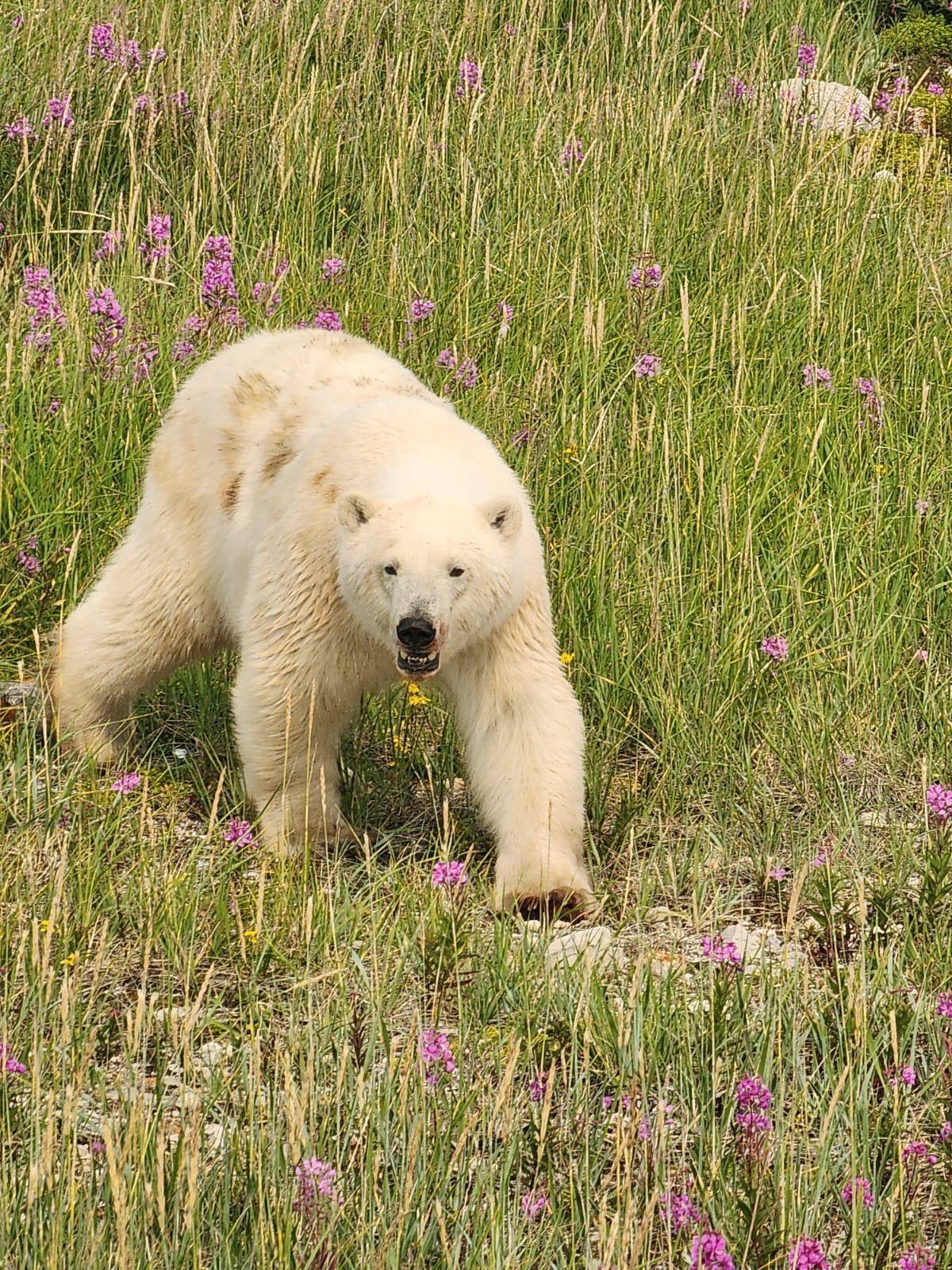
Bears and belugas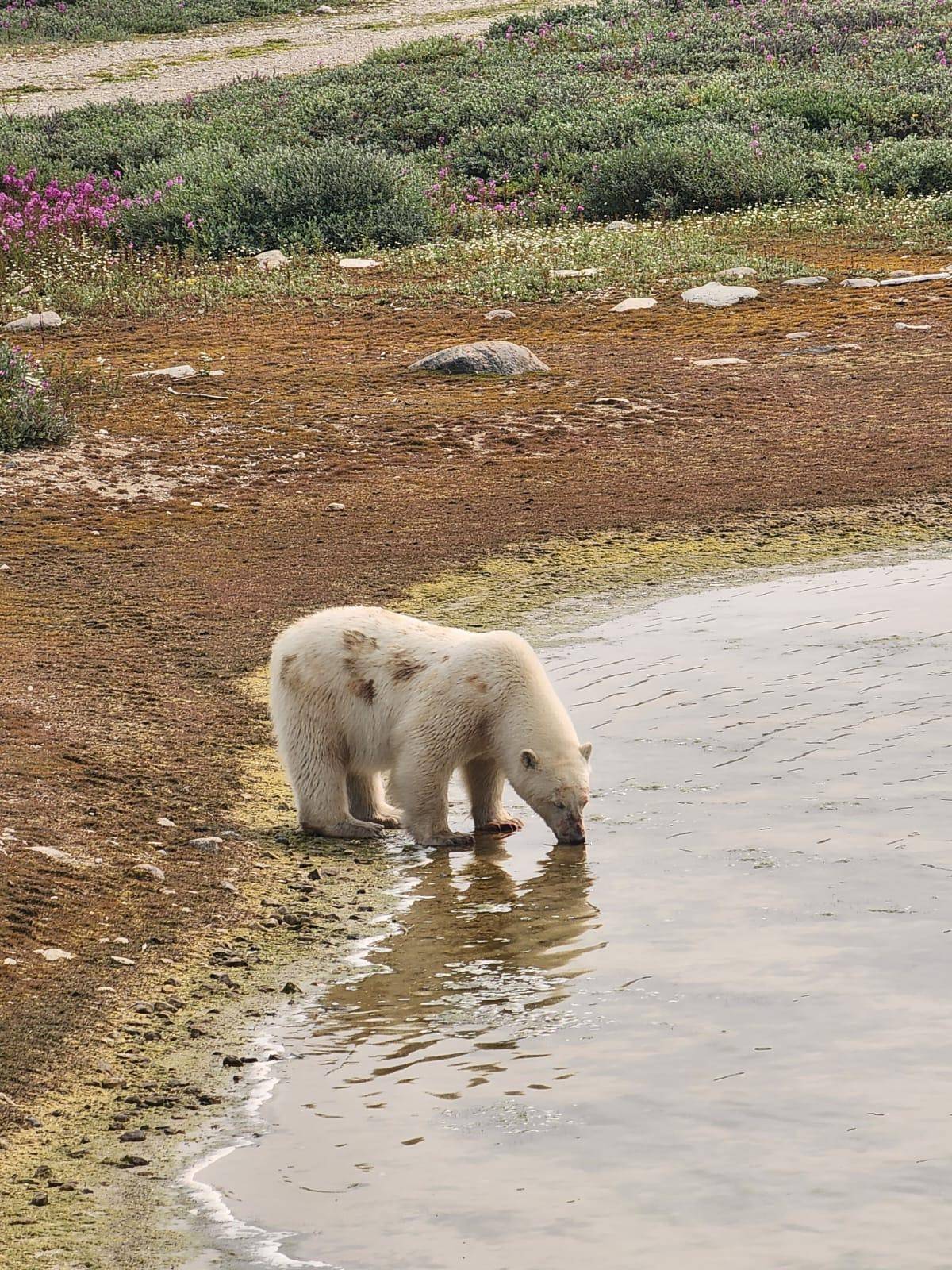 Quiet
Quiet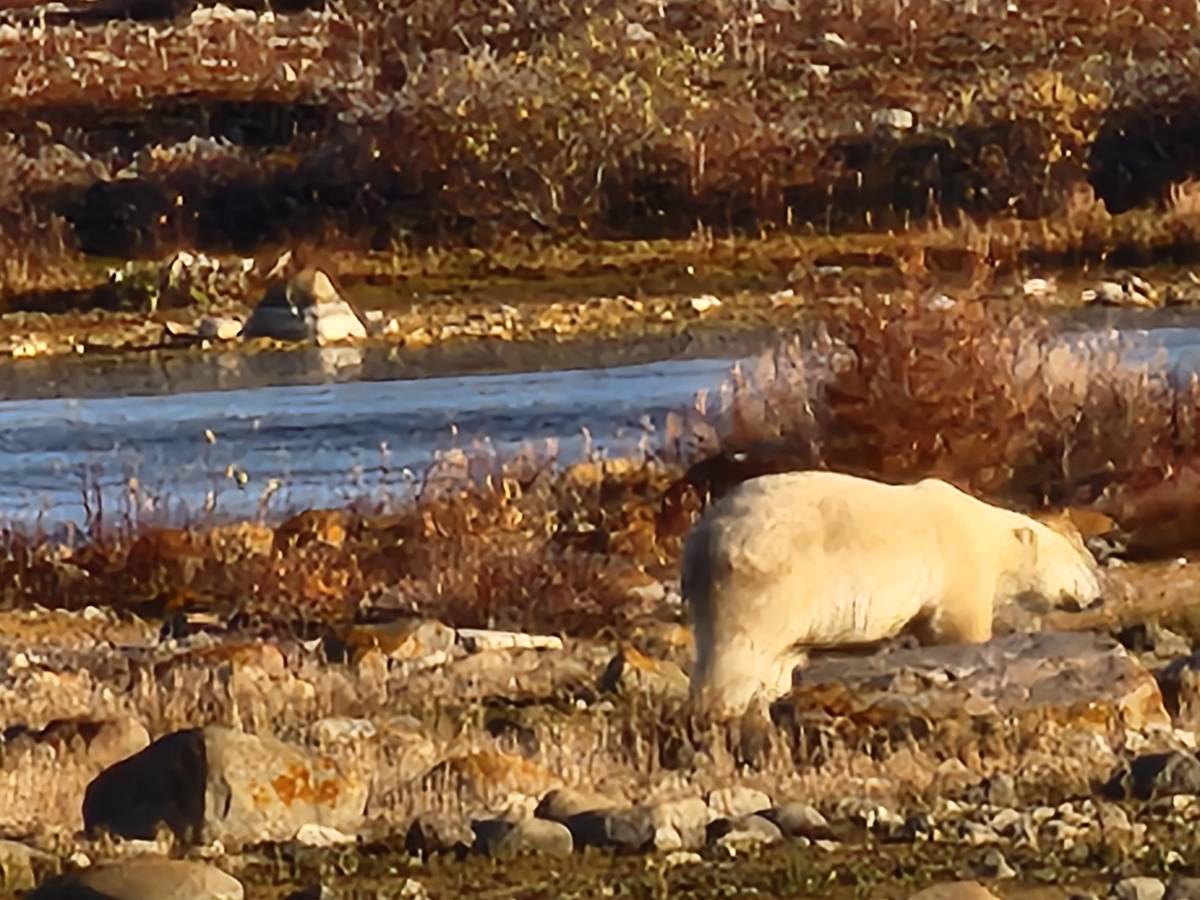 Peak
PeakDecision helper
Which month suits your trip?
Tap the line that fits your priorities
From mid-July through to mid-November the entire population is forced onto adjacent coastal lands as the ice disappears.
Can you see polar bears in Churchill in summer?
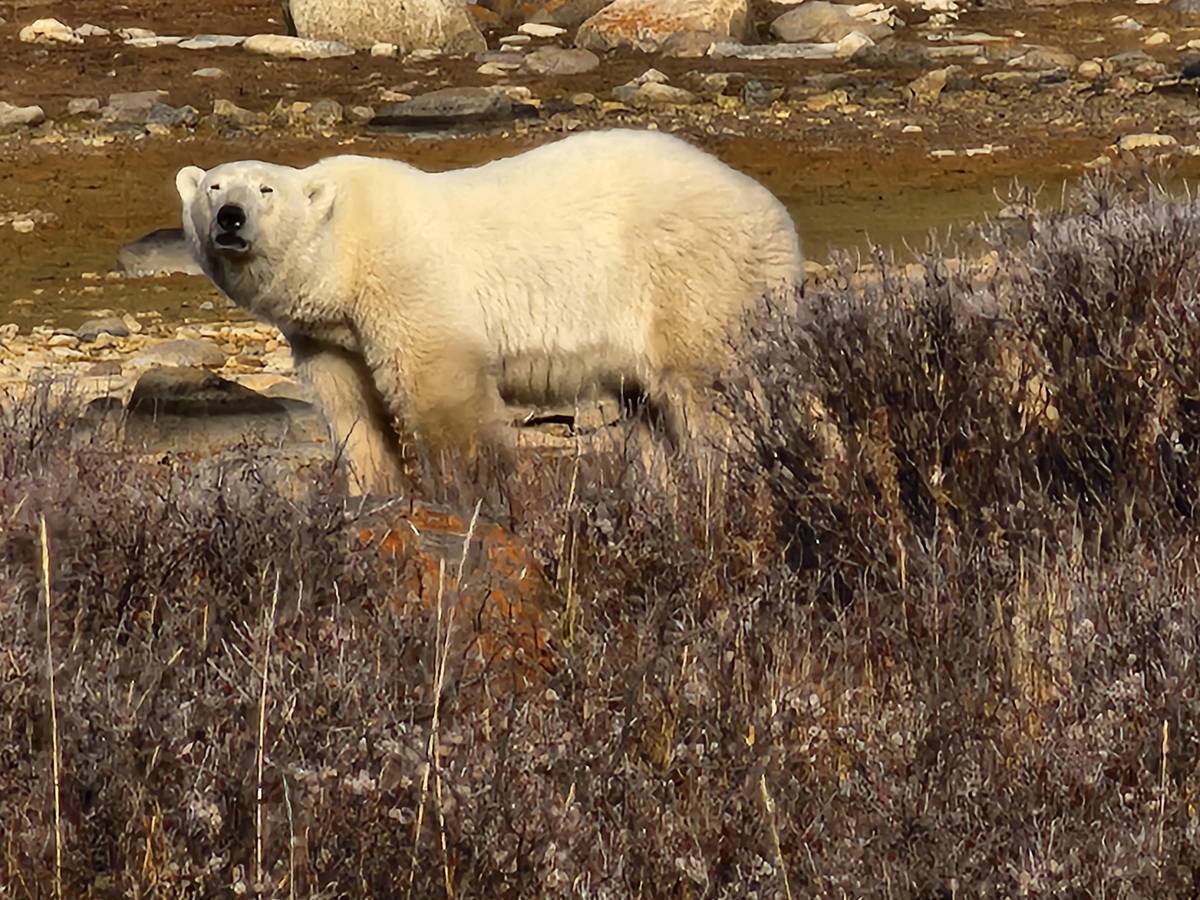
Yes, you can see polar bears in Churchill in summer, but the experience is quieter. Destination Canada describes summer bears as more low-key, often spotted lounging on rocks and living off the fat reserves they built up over the winter.4 Destination Canada also gives July to November as the broad window for polar bears, with the snowy spectacle reserved for October and November.142
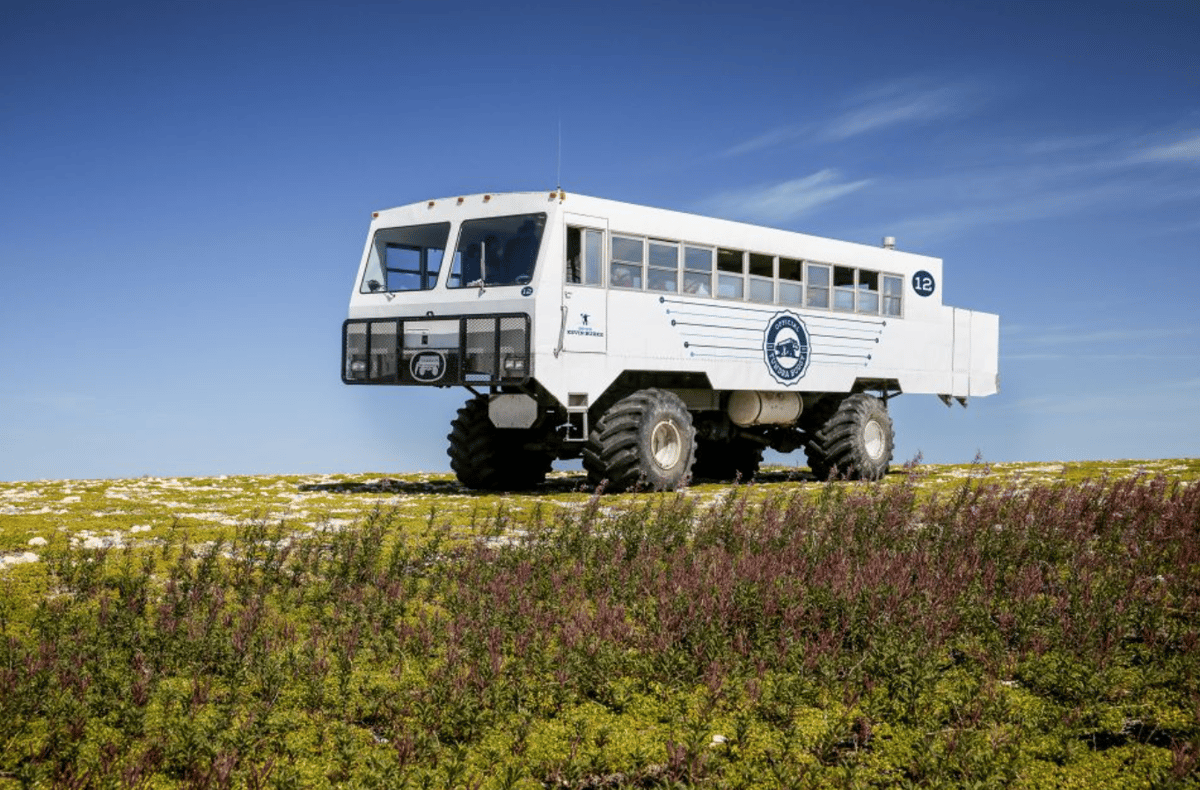
Frontiers North runs its Tundra Buggy day tours in July and August as well as in the autumn.6 The summer excursion spends six hours on the tundra with expert interpretation of the flora and fauna of the Churchill Wildlife Management Area.15 The day trip on this site covers that summer version too, which the operator describes as a 6-hour day focused on flowers, birds and the first bears returning from the ice.
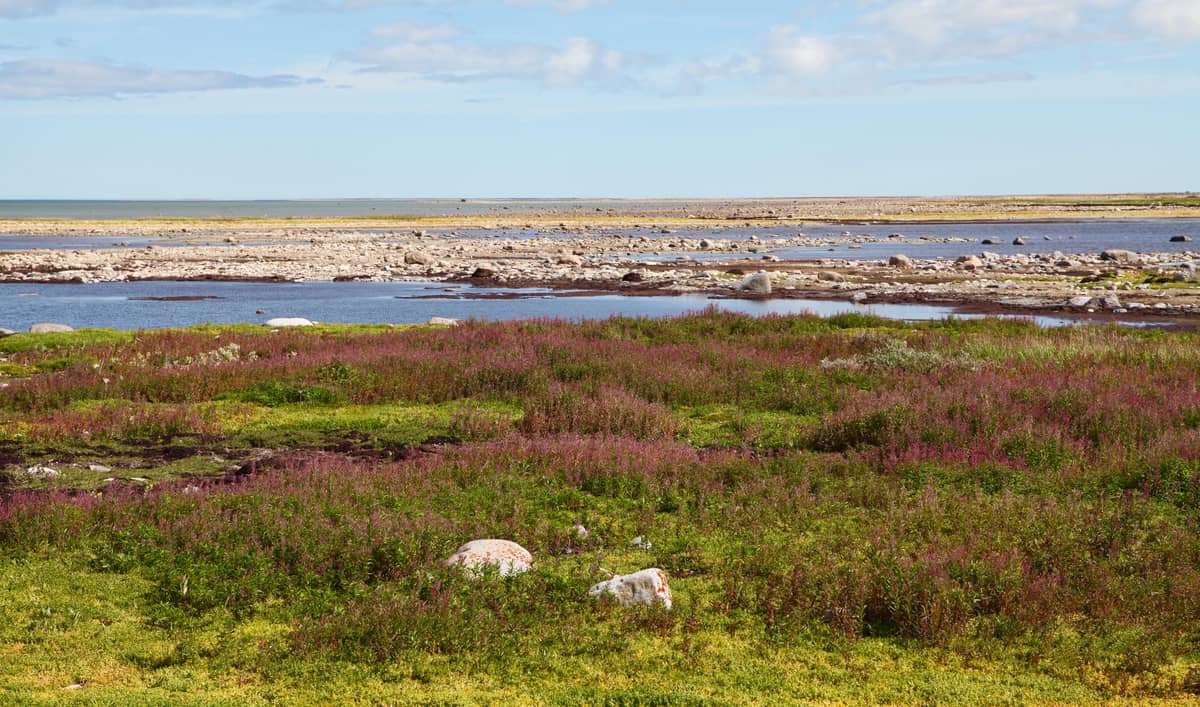
Summer has its own rewards. Beluga whales come to the Churchill area in July and August, and Destination Canada notes that thousands enter the nearby Churchill and Seal estuaries.1216 The tundra turns green, the days are long and the weather is far milder. In July the average daily high at Churchill is 17.9 °C.13 If you want variety rather than the largest number of bears, summer is a strong choice.
Checklist
Planning around the season
01
Timing
- Aim for late October
- Keep spare days for weather
- Shoot in the midday light
02
Clothing
- Thermal and windproof layers
- Insulated boots and gloves
- A neck warmer for the deck
Cost calculator
Price your season
Select an option and a headcount to get the combined from-price.
People
Total from$457
per person from $229
Check availabilityTotals rest on the cheapest per-person price GetYourGuide shows, converted with European Central Bank rates; only the booking form gives the final cost.
Video
Polar Bears, Beluga Whales and Northern Lights in Churchill, Manitoba, Canada
The video starts loading once you tap play.
Can you see polar bears in Churchill in September?
Can you see polar bears in Churchill in September? The bears are ashore then, because the whole population stays on the coastal land from mid-July to mid-November.3 The difficulty is the tours rather than the bears. Frontiers North lists its day tour seasons as July to August and October to November, so September falls between them on its calendar.6 Check the operator's current dates before you plan a September trip around a tundra day.
September is a month of change on the tundra. The summer greens give way to the reds and browns of autumn, the first frosts arrive and the days shorten quickly. At mid-month the sun is above the horizon for 12.5 hours in September, against 17.4 hours in July.1313 The average daily high in September is 9.5 °C, so you need warmer clothes than in summer but not yet the full winter kit.13
If your dates are fixed to September, it is still worth asking operators and lodges directly whether they run trips in September. Just be clear about what you are buying. A September trip is a wildlife and landscape trip with a chance of bears, not the peak polar bear experience of late October, when the bears gather in larger numbers near the freezing bay. Bring layers you can add or remove as the day warms up.
How the sea ice is changing the season
The bears' calendar follows the ice, and the ice is changing. Polar Bears International reports that sea ice break-up on Hudson Bay now comes three to six days per decade earlier than before, and freeze-up is delayed by about the same.17 In the 1980s the average ice-free period in Western Hudson Bay was 124 days; today it is well over a month longer.18 For the bears that means more time on land without food.
For visitors, a later freeze-up can stretch the autumn viewing season into November, while an early freeze can end it sooner. In 2025, ice strong enough for bears to walk on did not form near Churchill until November 26.11 No one can predict the freeze-up date months ahead, which is why a few spare days in your plan are worth more than a single perfectly chosen date. Ask about the exact operating dates for the year you travel.
These changes are also a reason to go with operators who take conservation seriously. The polar bear is listed as Special Concern under Canada's Species at Risk Act and as Threatened under Manitoba's own law.19 Choosing a licensed operator, staying on established trails and keeping your distance are small but real ways to make sure that your visit does not add to the pressure on the bears.
Weather to expect in the bear season
Autumn on Hudson Bay is cold and gets colder by the week. In October the average daily high at Churchill is 1.6 °C and the average low is -3.9 °C.13 By November the average high has fallen to -8.9 °C and the average low to -16.4 °C.13 Snow, wind and grey skies are part of the experience, and a clear, bright day on the tundra is something to be grateful for when it comes. Treat the season as a range of weeks, not a fixed date.
Daylight shrinks just as fast. At mid-month the sun is above the horizon for about 9.8 hours in October and 7.3 hours in November.1313 That is still plenty for a full day on the tundra, but it means early starts and short afternoons for photographs. Plan your best camera time for the middle of the day, when the low sun gives the bears' coats that warm golden light. Respect for the animals is part of a good trip.
Dress for the conditions rather than the calendar. Wear thermal layers, a windproof outer jacket, insulated boots, a warm hat and gloves, and bring a neck warmer for the time you spend on the back deck. Keep spare batteries close to your body, as the cold drains them quickly. With the right clothing, the weather becomes part of the adventure rather than something that cuts your day on the tundra short.
Polar bear season
Spend a day among the bears
A full day on the tundra in a Tundra Buggy, with a light meal on board.


You ask,we answer.
When is the best time to go?
October to early November. That is Travel Manitoba's recommended window for polar bears in Churchill.1
Are there bears in summer?
Yes, but fewer and calmer. Summer bears are often seen lounging on rocks, living off their fat reserves.4
Are there bears in September?
They are ashore. The whole population is on land from mid-July to mid-November.3
When do the bears leave?
When the bay freezes. They stay on land until the bay freezes over in late November.8
Are there tours in winter?
Not for bears. From mid-November to mid-July most bears are out on the ice of Hudson Bay.5
How cold is it in November?
Around -8.9 °C by day. The average November low at Churchill is -16.4 °C.13
Is the season changing?
Yes, with the sea ice. The ice-free period is now well over a month longer than in the 1980s.18
Sources
What this text is based on
- 1Travel ManitobaDiscover Churchill, Manitoba↩
- 2Destination CanadaChurchill's wildest seasons: when to see what↩
- 3Province of ManitobaPolar Bears↩
- 4Destination CanadaChurchill's wildest seasons: when to see what↩
- 5Province of ManitobaPolar Bears↩
- 6Frontiers North AdventuresTundra Buggy Day Tours↩
- 7Parks CanadaPolar bears - Wapusk National Park↩
- 8Province of ManitobaPolar Bears↩
- 9Polar Bears InternationalAs sea ice melts, Western Hudson Bay polar bears head to land for the summer↩
- 10Parks CanadaPolar bears - Wapusk National Park↩
- 11Polar Bears InternationalA long wait for sea ice↩
- 12Travel ManitobaDiscover Churchill, Manitoba↩
- 13Environment and Climate Change CanadaClimate normals, Station Churchill A (ECCC 5060600), 1981 to 2010↩
- 14Destination CanadaChurchill's wildest seasons: when to see what↩
- 15Frontiers North AdventuresTundra Buggy↩
- 16Destination CanadaChurchill's wildest seasons: when to see what↩
- 17Polar Bears InternationalReflecting on Western Hudson Bay Polar Bears↩
- 18Polar Bears InternationalA long wait for sea ice↩
- 19Parks CanadaPolar bears - Wapusk National Park↩
Keep reading