 Autumn gathering
Guides
Language
EnglishCurrency
US dollar · $Prices on GetYourGuide appear in your chosen currency.
Guide · The bears
Why do polar bears go to Churchill?
Every autumn polar bears wait on the coast near one small town. Here is why polar bears go to Churchill, what they are waiting for, and how the town keeps people and bears apart.
Check availabilityfrom $229
Editorial team, churchill-polar-bear-tours.comUpdated October 16, 20267-minute read27 sources
The short answer
- 01The ice
- Hudson Bay freezes every winter and melts every summer, forcing the bears ashore.1
- 02The wait
- As autumn approaches they move north along the coast to where the first ice forms.2
- 03The peak
- Numbers peak on the Cape Churchill peninsula, from town to Wapusk National Park.3
- 04The fast
- On land they largely fast until they can hunt seals again.4
- 05The town
- A control zone keeps bears out of Churchill itself.5
It all comes down to the sea ice
Why do polar bears go to Churchill? The answer lies on Hudson Bay itself. The bay freezes over completely every winter and melts out completely every summer, forcing the resident polar bears ashore with nothing of substance to eat, because their main prey, seals, is out of reach.1 A polar bear hunts from the ice, so when the ice disappears the bears have no choice but to come to land and wait for it to return.
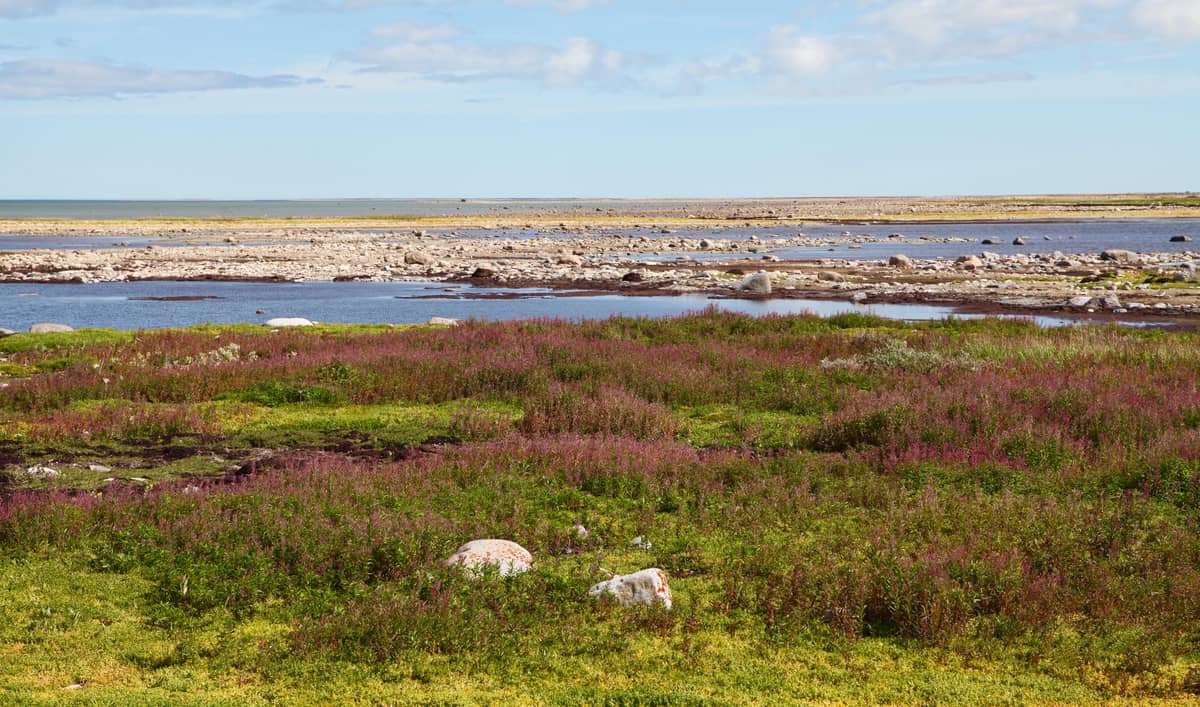
The pattern is regular. Most of the Western Hudson Bay population spends mid-November to mid-July out on the ice of the bay.6 From mid-July to mid-November the whole population is forced onto the coastal land as the ice disappears.7 Churchill lies on the western shore of Hudson Bay, surrounded by subarctic tundra and permafrost, right in the middle of the land the bears use during their months ashore.8
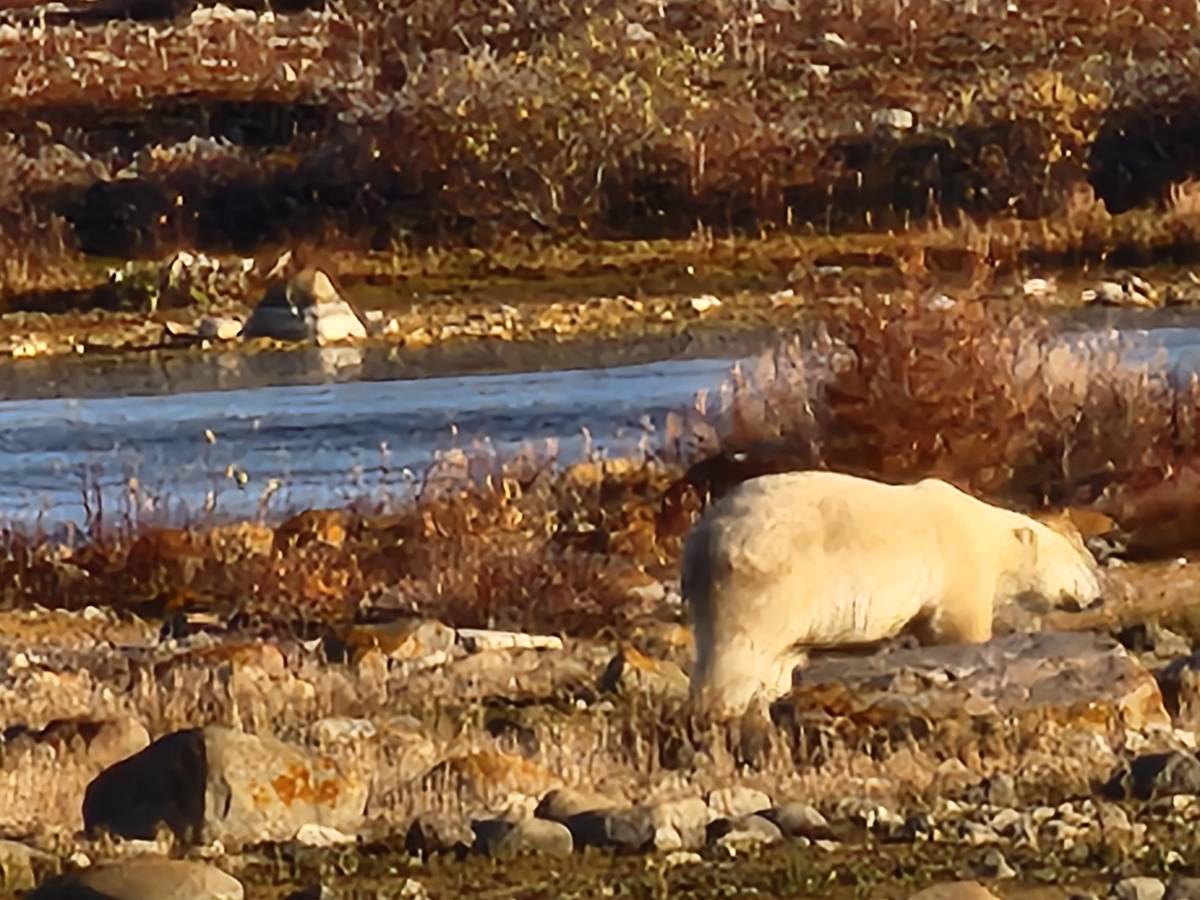
In autumn the bears do not simply wait anywhere. According to the Province of Manitoba, as autumn approaches they begin to move northward along the coast and congregate where the first winter ice forms.2 That movement brings them past and around the town in the weeks before freeze-up. It is the reason Churchill, a small town at the end of the railway, became famous for its wild polar bears.
The bear year
A year in the life of a Hudson Bay bear
-
Mid-November to mid-July
Hunting on the ice
Most of the population is out on the frozen bay.6
-
Mid-July
Coming ashore
As the ice disappears, the bears are forced onto land.7
-
Summer
The long fast
On land they largely fast until the bay freezes.4
-
Autumn
Heading north
They move along the coast to where the first ice forms.2
-
Late November
Back to the ice
The bears leave once the bay freezes over.9
The polar bear migration at Churchill
What visitors call the polar bear migration at Churchill is this autumn movement along the coast. Travel Manitoba puts the best time to see them in October to early November.10 Destination Canada describes the same weeks as the time when the bay begins its steady freeze and the bears gather along the coast, eager to head out and hunt seals.11 In other words, the migration is really a slow walk towards the ice, repeated by the same bears year after year.
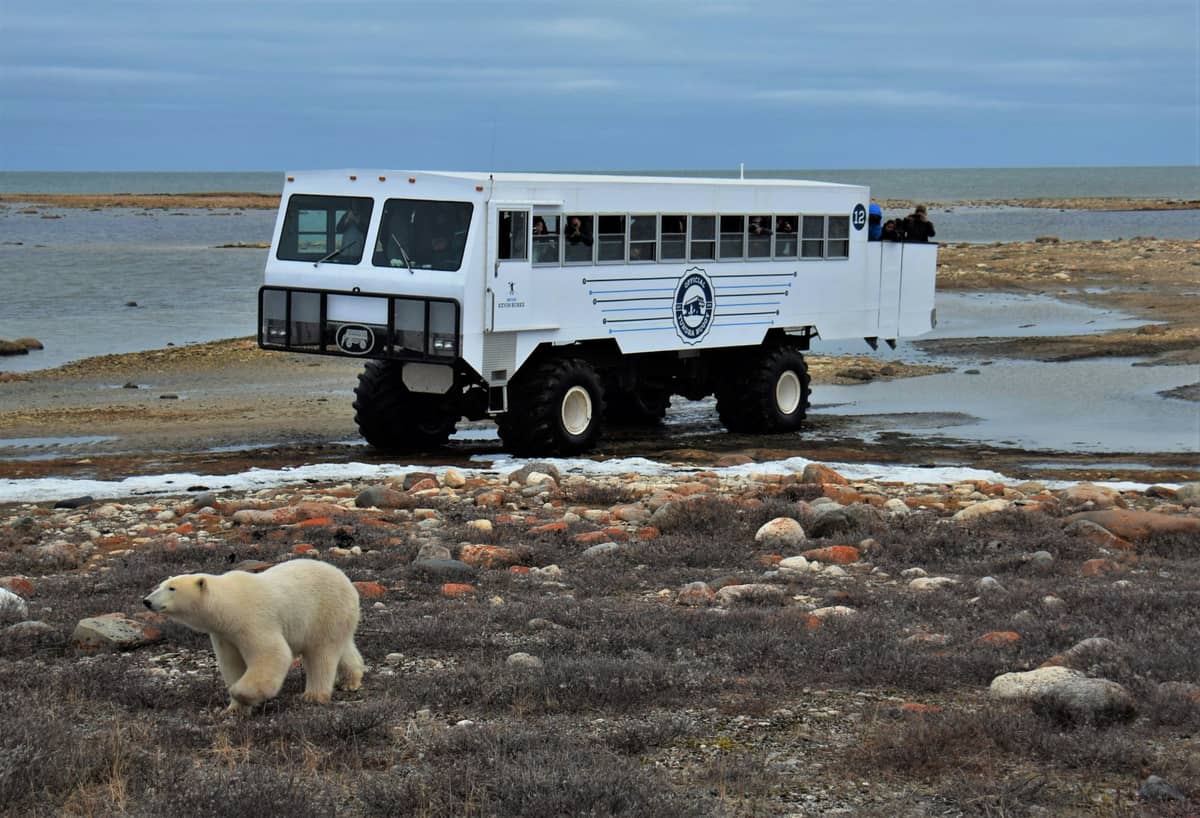
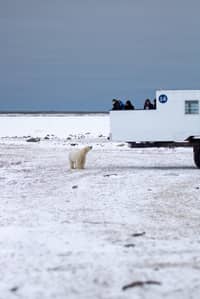
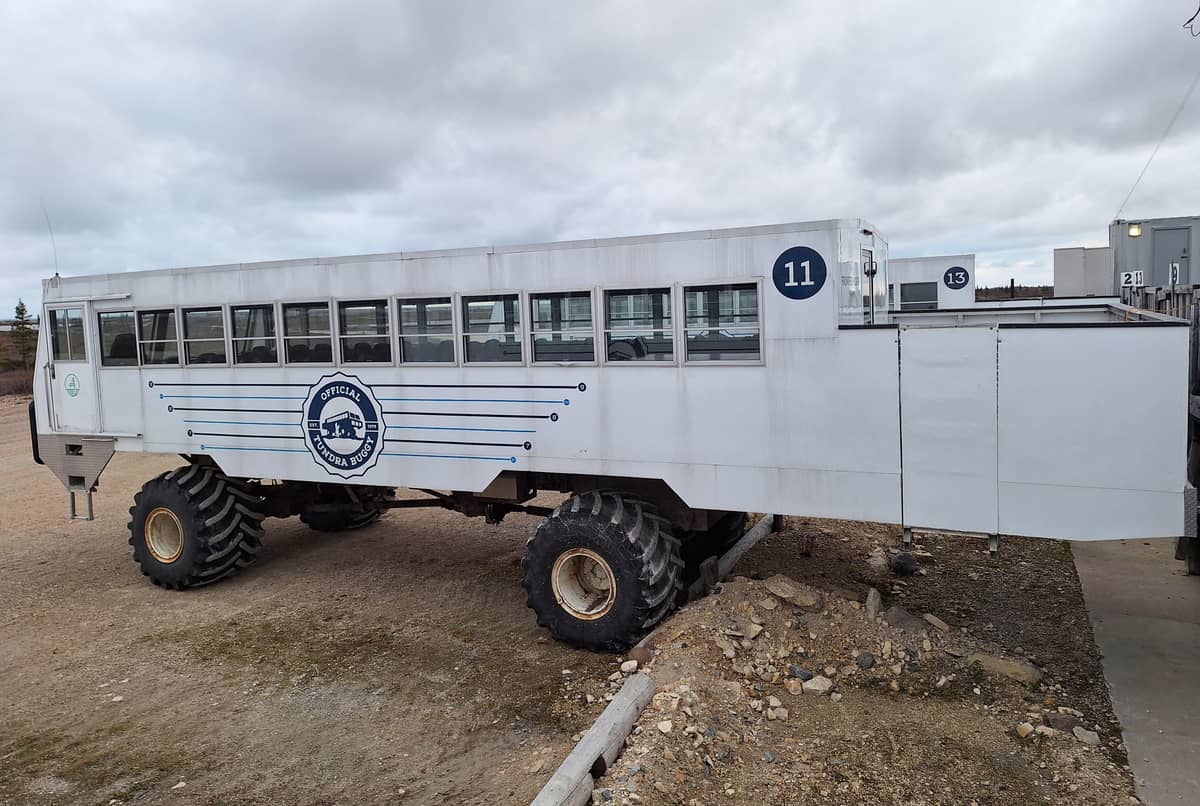
The bears concentrate in one area in particular. During this time the number of bears peaks along the Cape Churchill peninsula, a stretch of coastline that runs from the town of Churchill to the northern tip of Wapusk National Park.3 That is the landscape the tundra vehicles explore, and it is why tours from Churchill have such good odds in the autumn compared with almost anywhere else that polar bears live.
Not every bear behaves the same way. Female bears, especially those that are pregnant or have cubs, travel inland to the denning area, while larger bears gather along the coast.12 The big males you see sparring near the shore in October are therefore only part of the story. Further inland, in protected country, the next generation is being born in snow dens over the winter months.
Population
Western Hudson Bay polar bears
bears
The ice and the bears
What changes through the year
| Period | Sea ice | Where the bears are |
|---|---|---|
| Mid-November to mid-July | Bay frozen | Out on the ice, hunting seals |
| Mid-July to mid-November | Ice gone | On the coast, largely fasting |
| Autumn | Ice starting to form | Gathering where the first ice forms |
| Late November | Bay frozen over | Walking back out onto the ice |
Where the bears go
Three places in the bears' world
Autumn gathering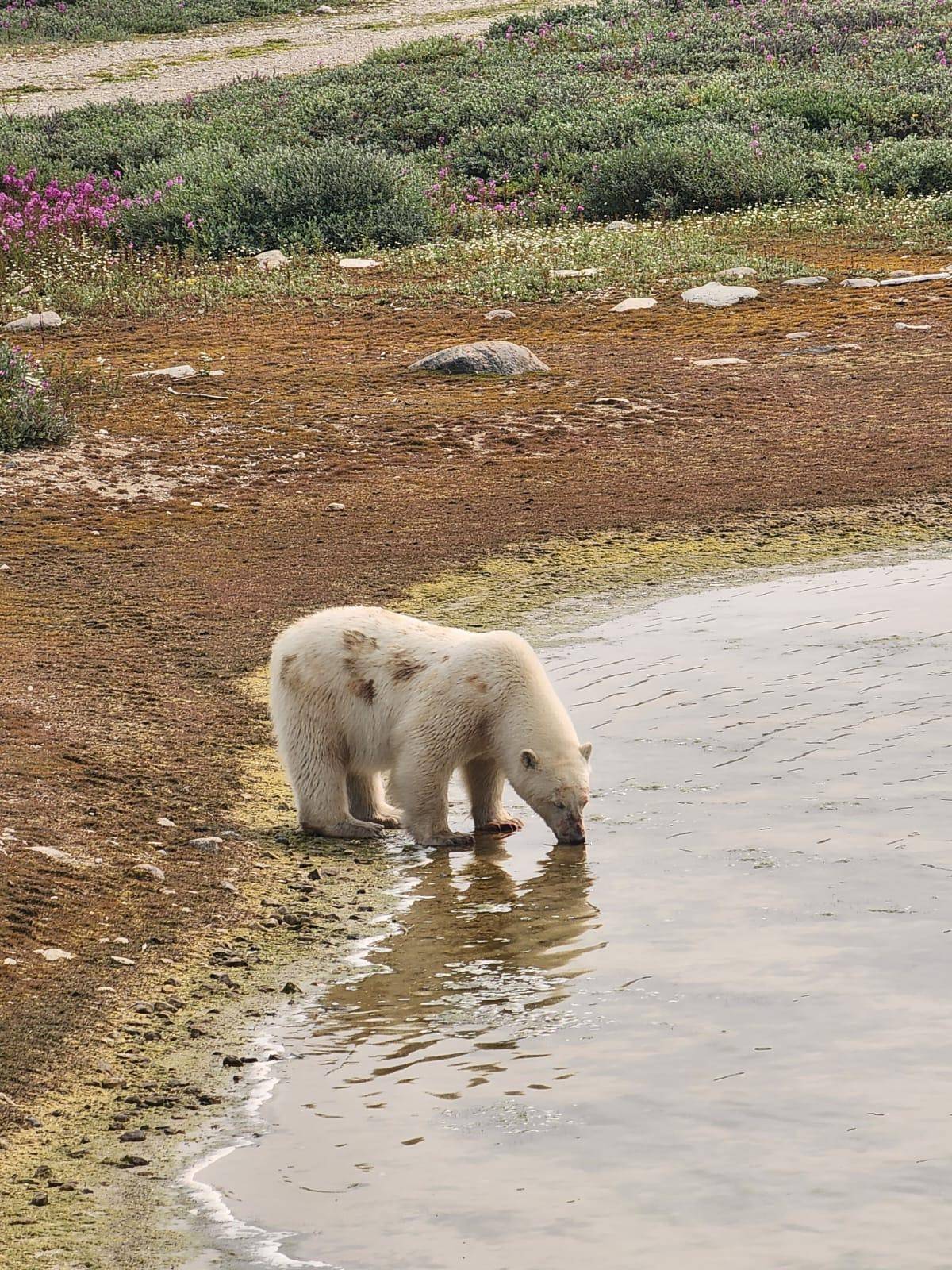 Protected
The denning area
Wapusk National Park
- Who
- Mothers and cubs
- When
- Winter
- Access
- Licensed operators
 Hunting ground
Decision helper
When should you come to see this?
Tap what you want to see
As autumn approaches, they begin to move northward along the coast and congregate where the first winter ice forms.
Months on land without food
The time ashore is hard on the bears. While they are on land, polar bears largely fast until they can hunt seals again when the bay freezes.4 Polar Bears International notes that an average bear loses about 1 kilogram of body mass per day while it is on land and fasting.16 A long summer and a late freeze-up therefore mean many extra days of living on the fat stored up during the spring hunt on the ice.
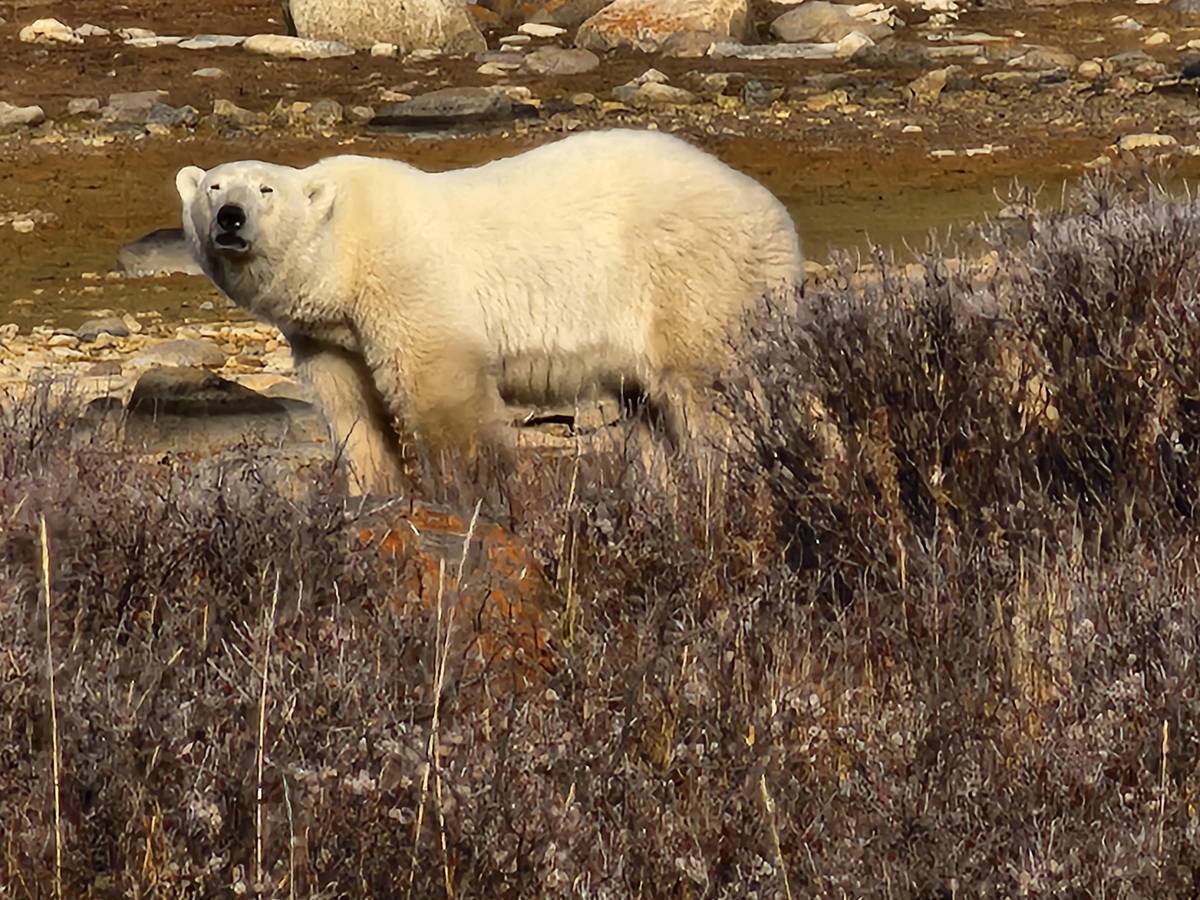
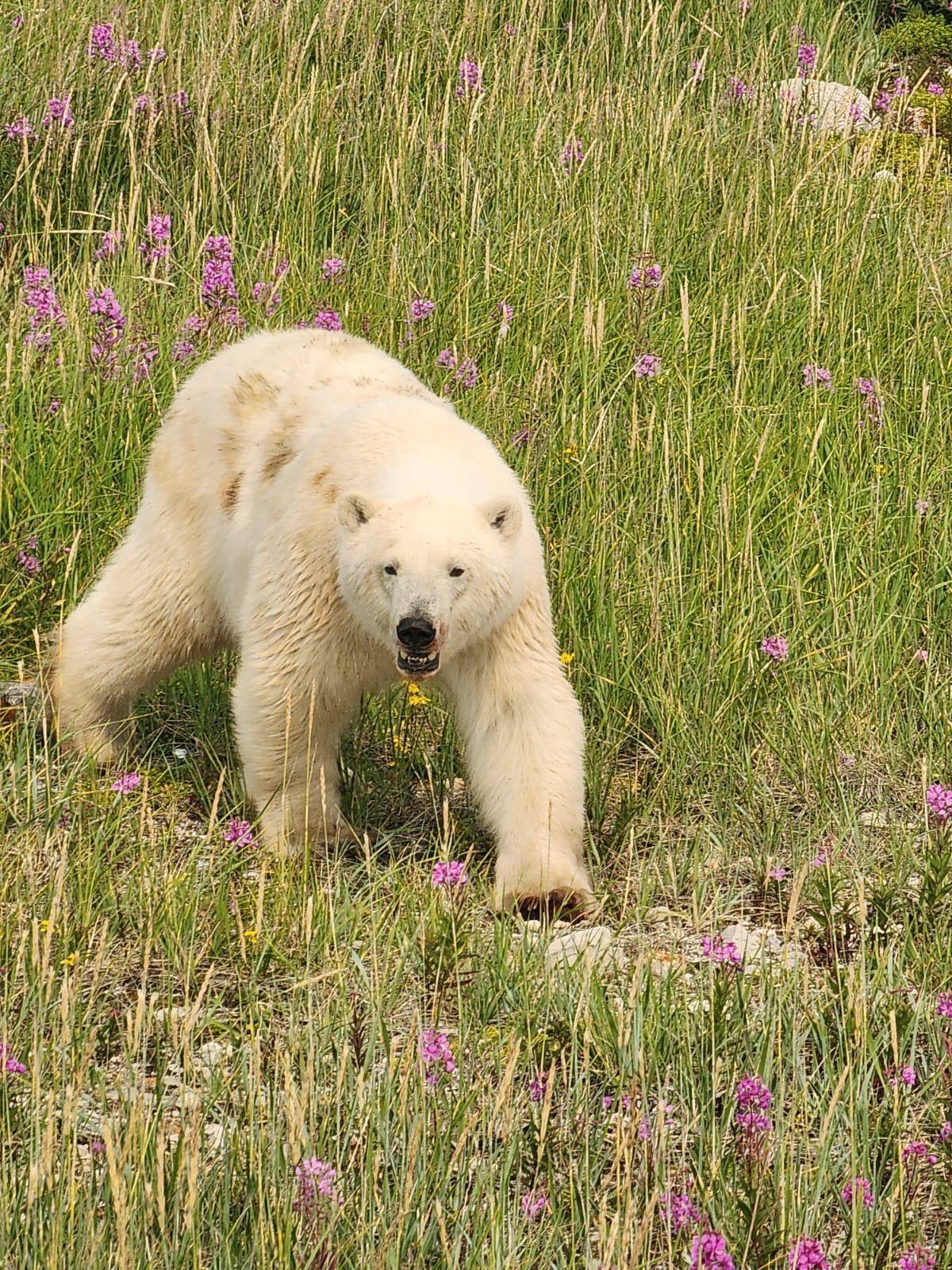
That is why the bears you see in autumn often seem so calm. Many of them rest for long periods, conserving energy rather than wandering. They are not lazy; they are waiting. The moment the ice forms and holds their weight, they walk out onto the bay to hunt again. When you watch a bear lying in the willows for an hour, you are seeing that strategy at work. Keep quiet near a resting bear and let it be; disturbing it costs it energy it cannot replace until the ice returns.
The bears stay on land until the bay freezes over in late November, according to the Province of Manitoba.9 The exact date changes from year to year. In 2025, sea ice strong enough for bears to walk on did not form near Churchill until November 26, according to Polar Bears International.17 For the bears every extra day matters, and for visitors it means the viewing season can shift a little each autumn.
Checklist
Watching the bears responsibly
01
Do
- Go with a licensed operator
- Stay on established trails
- Report any bear you see in town
02
Never
- Walk at the edge of town alone
- Approach or feed a bear
- Wander out after dark in the season
Video
On The Edge: The People and Polar Bears of a Warming Arctic | 2025 documentary
The video starts loading once you tap play.
Wapusk and the denning area
South and east of Churchill lies Wapusk National Park. This 11,475-square-kilometre park, at the transition between boreal forest and arctic tundra, protects one of the largest polar bear maternity denning areas in the world.18 It is part of the reason the Churchill region matters so much to the Western Hudson Bay population: the coast offers a place to wait, and the land behind it offers a place to raise cubs.
The park is not open to casual visitors on foot. A licensed tour operator is required for all activities in Wapusk National Park.19 For most visitors the park is something you see on a map or from the air rather than a place you walk into, and that protection is exactly what the denning mothers need. Its northern tip marks the far end of the Cape Churchill peninsula where the bears gather.3
The bears' legal status reflects how vulnerable they are. The polar bear is designated as Special Concern under Canada's Species at Risk Act and listed as Threatened under Manitoba's own law.20 Watching them responsibly, with licensed operators on established trails, is part of what keeps the Churchill region a place where bears can still live and raise their young close to people.
How Churchill lives with its bears
Churchill is the only community where bears and people routinely interact, according to the Province of Manitoba.21 To manage that, the province runs the Polar Bear Alert Program, with a control zone around the townsite and the former dump in which polar bears are not allowed.5 When a bear enters the zone, the team first tries to move it away, and only if that fails is the bear captured.
Captured bears go to the polar bear holding facility in Churchill, a specially built compound.22 It holds problem bears captured during the bear alert season.23 Five air-conditioned cells are used in the summer, and a heated cell is available for orphaned cubs.24 In most years more bears are captured than the facility can hold, and some are then flown northwest, away from Churchill, by helicopter.25
The facility is not a visitor attraction, but the province does open it to the public on occasion. An open house is held every summer at the polar bear holding facility as part of its public awareness work.15 If you are in town in summer, ask locally about the date. Otherwise, the best way to understand the program is simply to follow its advice: never walk at the edge of town alone in the season, and report any bear you see.
A population under pressure
The bears that come to Churchill belong to a population in decline. Polar Bears International reports a 30 percent drop in the Western Hudson Bay population, from 1,185 bears in 1987 to 806 bears in 2011.13 Those are the latest figures that article cites, and Polar Bears International links the decline to the changing ice the bears depend on.13 Fewer bears means each sighting carries more weight.
The ice-free season is getting longer. Sea ice break-up on Hudson Bay now comes three to six days per decade earlier than before, and freeze-up is delayed by about the same.26 In the 1980s the average ice-free period in Western Hudson Bay was 124 days; today it is well over a month longer.27 Every extra week on land is another week of fasting for bears that are already living on stored fat.
Seeing the bears of Churchill is therefore a privilege with a responsibility attached. Choose licensed operators, stay on the established trails, keep your distance, and take home an understanding of why the bears are here. The answer to why polar bears go to Churchill is, in the end, a story about sea ice, and the future of the bears will be decided by what happens to it. Share what you learn.
Polar bear season
Spend a day among the bears
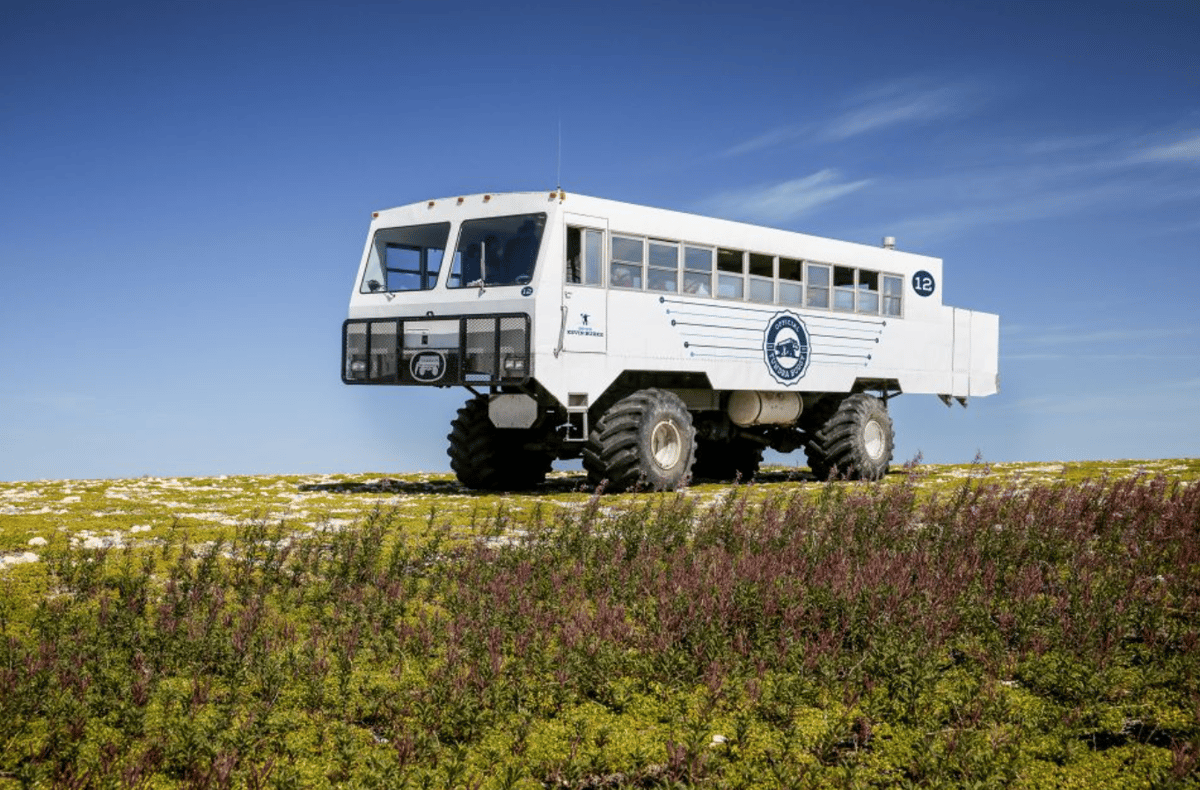
A full day on the tundra in a Tundra Buggy, with a light meal on board.


You ask,we answer.
Why are there so many bears near Churchill?
They wait there for the sea ice. As autumn approaches they move north along the coast and gather where the first winter ice forms.2
When do the bears arrive?
From mid-July. The whole population is on the coastal land from mid-July to mid-November.7
When do they leave?
When the bay freezes. They stay on land until the bay freezes over in late November.9
Do the bears eat while they wait?
Mostly not. On land they largely fast until they can hunt seals again.4
What is the polar bear holding facility?
A compound for problem bears. It holds problem bears captured during the bear alert season.23
Can I visit the holding facility?
At the summer open house. An open house is held every summer at the facility.15
Are the bears declining?
Yes, in Western Hudson Bay. The population fell from 1,185 bears in 1987 to 806 in 2011.13
Sources
What this text is based on
- 1Polar Bears InternationalA long wait for sea ice↩
- 2Province of ManitobaPolar Bears↩
- 3Parks CanadaPolar bears - Wapusk National Park↩
- 4Parks CanadaPolar bears - Wapusk National Park↩
- 5Province of ManitobaPolar Bears↩
- 6Province of ManitobaPolar Bears↩
- 7Province of ManitobaPolar Bears↩
- 8Travel ManitobaDiscover Churchill, Manitoba↩
- 9Province of ManitobaPolar Bears↩
- 10Travel ManitobaDiscover Churchill, Manitoba↩
- 11Destination CanadaChurchill's wildest seasons: when to see what↩
- 12Parks CanadaPolar bears - Wapusk National Park↩
- 13Polar Bears InternationalReflecting on Western Hudson Bay Polar Bears↩
- 14Destination CanadaChurchill's wildest seasons: when to see what↩
- 15Province of ManitobaPolar Bears↩
- 16Polar Bears InternationalReflecting on Western Hudson Bay Polar Bears↩
- 17Polar Bears InternationalA long wait for sea ice↩
- 18Parks CanadaWapusk National Park↩
- 19Parks CanadaWapusk National Park↩
- 20Parks CanadaPolar bears - Wapusk National Park↩
- 21Province of ManitobaPolar Bears↩
- 22Province of ManitobaPolar Bears↩
- 23Province of ManitobaPolar Bears↩
- 24Province of ManitobaPolar Bears↩
- 25Province of ManitobaPolar Bears↩
- 26Polar Bears InternationalReflecting on Western Hudson Bay Polar Bears↩
- 27Polar Bears InternationalA long wait for sea ice↩
Keep reading